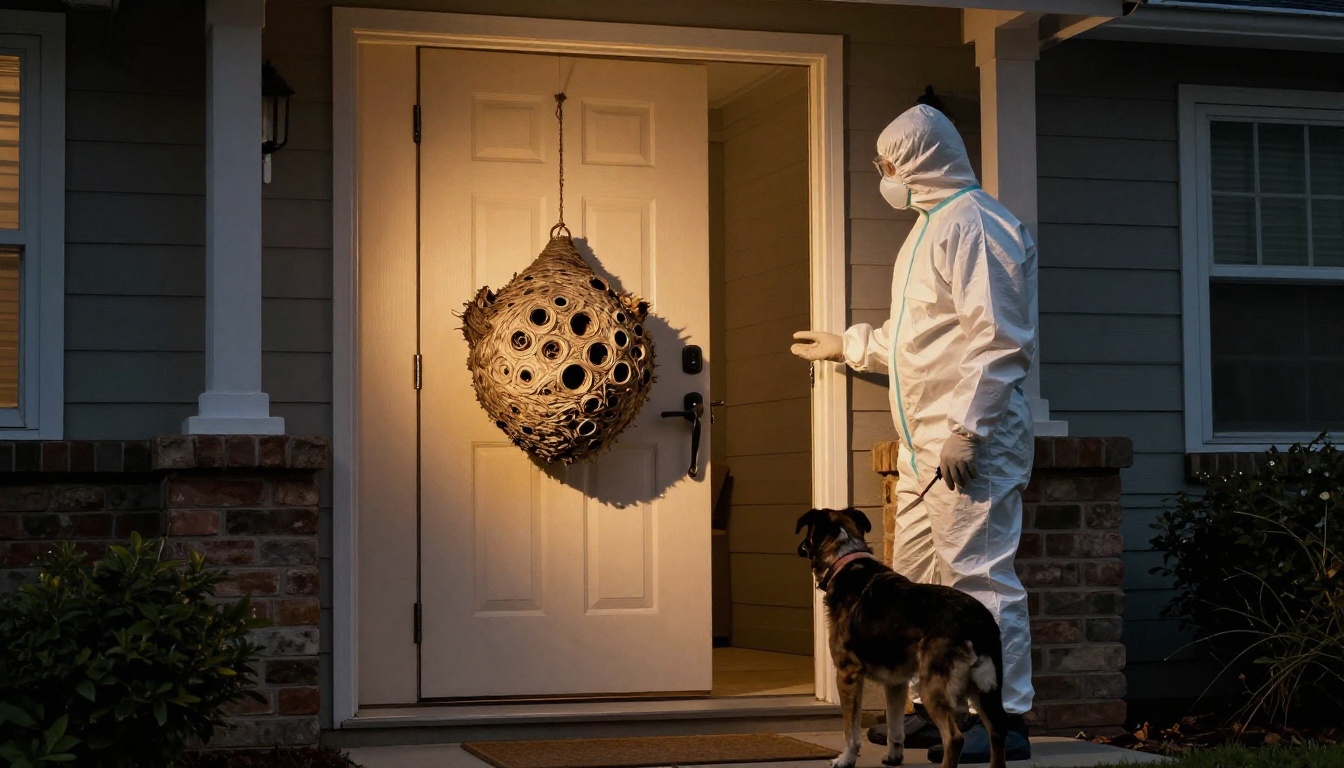
A wasp nest beside your front door can turn an ordinary trip outside into a pest control emergency, not merely an inconvenience. Emergency pest control for a wasp nest near your front door starts with protecting people and pets, not knocking the nest down as fast as possible.
Children, delivery drivers, visitors, and dogs may pass within inches of this pest problem without seeing it. We recommend closing off that entrance, using another route if it can't be safely isolated, and arranging same-day pest control. If the primary entrance remains blocked, that pest emergency may justify same-day service.
Key Takeaways
- Keep people and pets away from the doorway, and use another exit if possible.
- Don't hit, shake, soak, or stand directly beneath a wasp nest.
- Call 911 for breathing trouble, throat swelling, fainting, or severe allergic symptoms after a sting.
- Hidden nests in walls, soffits, and door overhangs need a different treatment plan than exposed paper nests.
- Ask a pest-control provider about licensing, treatment methods, follow-up, removal, and written pricing.
Looking for a Professional Pest Control Service ?
Keep Your Home Pest-Free Year-Round
Professional extermination and prevention services tailored to protect your family and property.
CALL NOWEmergency Pest Control for a Wasp Nest Near Your Front Door
A front-door nest needs prompt attention because the entrance has constant traffic. A nest at a high-traffic entrance can quickly become a pest control emergency when wasps react to vibration from slamming doors, lawn equipment, barking dogs, or footsteps on the porch.
First, block access. Next, move people and pets away. If the entrance can't remain safely open, treat it as a pest emergency and use another route. Then watch for sting reactions and schedule same-day service for pest control treatment. Urgency doesn't justify unsafe DIY action. Don't use DIY methods such as spraying, swatting at, or throwing objects at the nest. For an active nest near a doorway, have a pest control professional handle treatment. Those actions can provoke a defensive swarm.
What to Do in the First Few Minutes
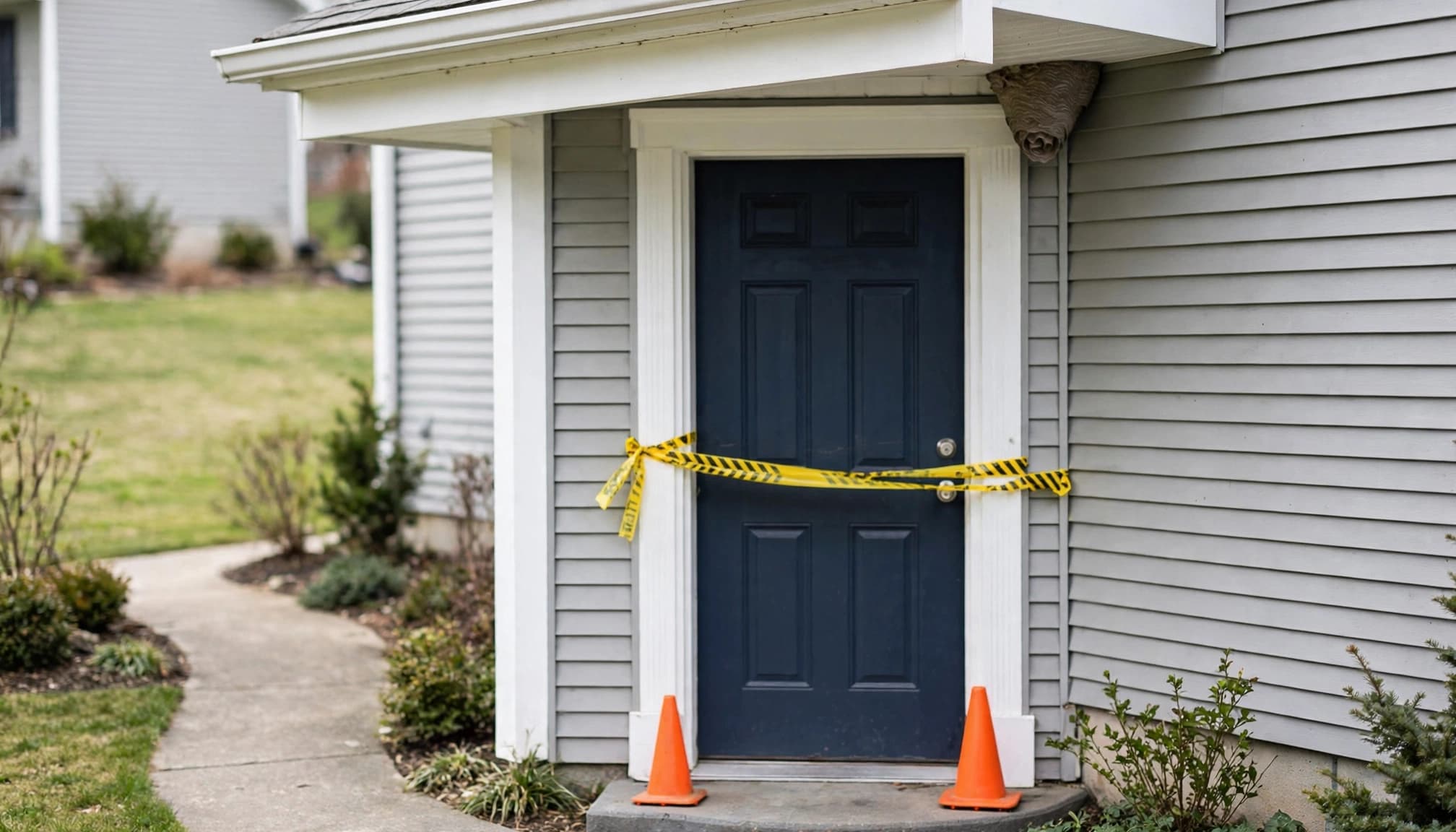
Keep everyone indoors or route them through a garage, back door, or side gate. Close windows near the nest so wasps can't enter the home through a partially open screen.
If you can do so without getting close, place a chair, planter, or temporary barrier several feet away to remind people not to use the entrance. Don't approach the nest to hang warning tape or inspect its shape.
Avoid loud activity near the area. Skip pressure washing, trimming shrubs, sweeping the ceiling, or repeatedly opening the door beneath the nest. Treatment should wait until people no longer need to pass through the space.
When a Wasp Sting Becomes a Medical Emergency
Call 911 or your local emergency number right away for trouble breathing, wheezing, throat tightness, swelling of the mouth or throat, dizziness, fainting, or widespread hives. A sting in the mouth or throat also needs urgent attention, as do multiple stings.
For a mild sting, wash the area with soap and water. Apply a cold pack in short intervals, wrapped in cloth, and follow medical guidance for pain or itching. The Children's Hospital of Philadelphia's sting guidance also advises seeking help for symptoms that worsen or do not improve.
If anyone gets pesticide on their skin, in their eyes, or inhales spray, call Poison Help at 1-800-222-1222. Keep the can or product label nearby. The EPA's pesticide exposure first-aid instructions explain why the label matters during a poisoning call.
A nest problem becomes a medical emergency when a person's airway, breathing, or consciousness changes after a sting.
How to Tell Whether the Nest Is Exposed or Hidden
You don't need to get close to tell whether you may have a hidden colony. Watch from indoors, through a window, or from a safe point across the yard.
An exposed nest often looks like gray paper with open cells or a rounded shell under a porch ceiling, eave, light fixture, or door overhang. Hidden nests often reveal themselves through steady wasp traffic entering a wall gap, soffit seam, utility opening, or trim crack.
Why Nest Location Changes the Treatment Plan
An exposed nest may allow direct treatment when conditions are safe. A nest inside a wall void or soffit can indicate an established pest infestation and needs controlled treatment at its entry point.
Don't drill through siding, drywall, or trim to reach a hidden nest. Forced access can cause structural damage and spread wasps into the building.
Fewer visible wasps don't always mean the colony is gone. Returning workers may still enter the structure, while the nest remains protected behind the wall. Repeated traffic into one opening is ongoing pest activity and a reason to call a professional.
Why DIY Wasp Spray Can Make the Problem Worse
Spraying from directly below puts you in the flight path. Wind can also blow aerosol back toward your face, while a flammable product near a porch light, grill, or pilot source creates another hazard.
DIY methods such as punching holes, flooding a wall void, or spraying from an unsafe position can cause property damage as well as expose you to stings and chemicals.
Pesticide labels set the legal directions for where and how a product can be used. Don't mix chemicals or spray indoors unless the label clearly allows it. One quick spray rarely solves a nest hidden behind siding or inside a doorway structure.
What Professional Wasp Nest Removal Usually Involves
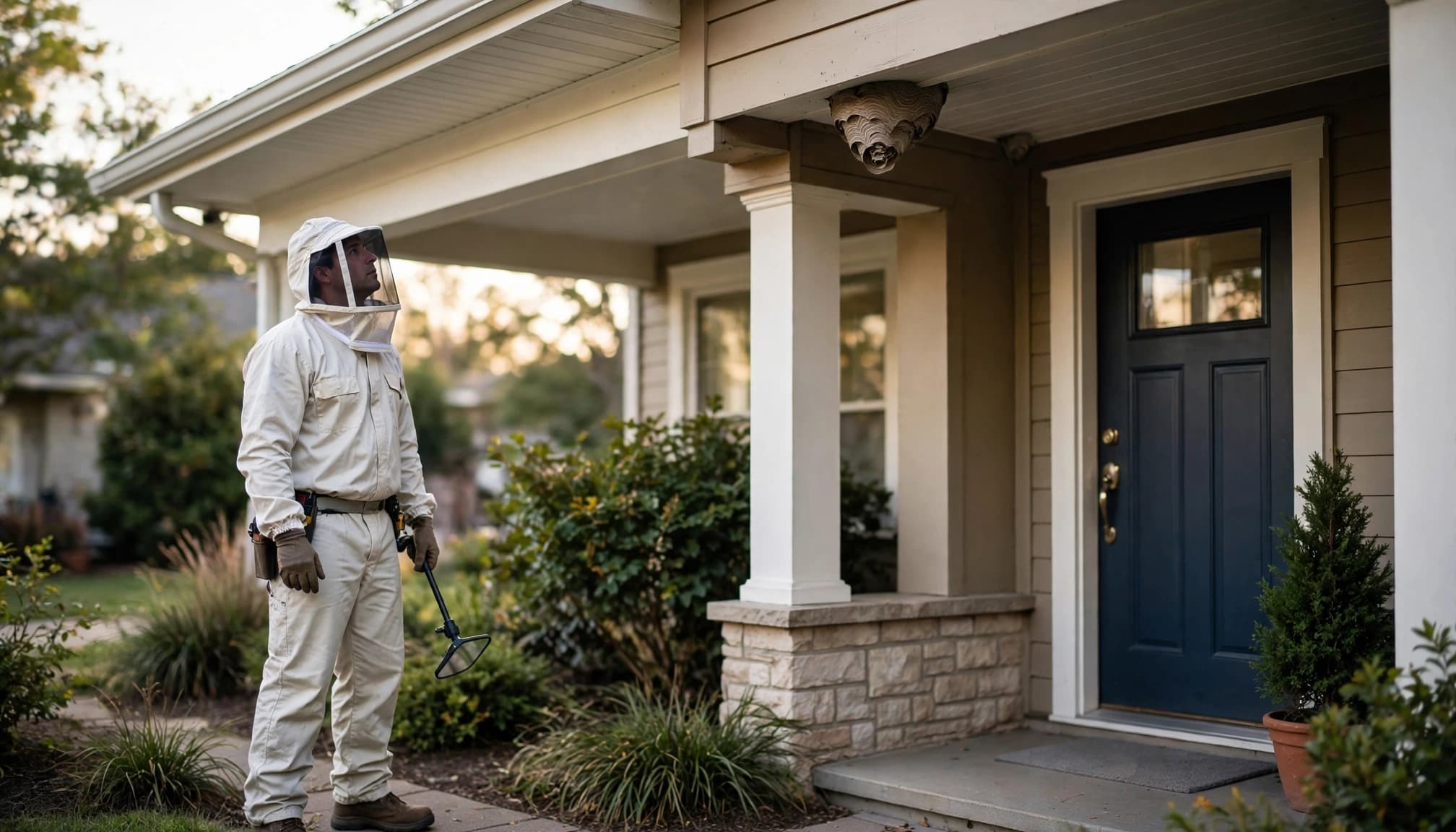
A careful service visit begins with an inspection. The technician checks the nest location, activity level, access route, and nearby risks before choosing a treatment method. A pest control expert can also identify hazards that aren't obvious from the ground.
When a nest blocks or threatens the entrance, it can become a pest control emergency. A blocked or dangerous entrance may also qualify as a pest emergency requiring same-day pest control. USPestControlServices.online can connect you with a pest control company offering emergency pest control services. Before booking, ask how the technician will protect children, pets, and anyone who needs to use the property.
A pest control professional should assess any hidden or hazardous nest. Trained assessment is safer than relying on DIY methods.
Inspection, Targeted Treatment, and Safe Nest Removal
Technicians often treat during early morning or late evening because wasps are usually less active then. Still, lower activity doesn't remove the need for protective equipment, a safe working distance, and a clear retreat path.
For a visible nest, targeted pest control treatment may focus on the nest itself. For a wall or soffit void, the technician may treat the active entry point with a product suited to that location. Many product labels direct users to wait at least 24 hours before nest removal, rather than pulling down a freshly treated nest.
A reliable provider explains when you can safely reopen the entrance and outlines its pest control plans. If activity continues, ask whether its pest control plans include a follow-up visit.
What Affects Emergency Wasp Control Cost
There is no universal price for emergency wasp removal. A small, reachable nest under an open eave generally takes less work than a large colony inside a second-story soffit. A pest control company's pricing should reflect the work and risks involved.
Cost often depends on:
- Same-day service, weekend, or after-hours availability.
- Nest size, nest count, and how long the colony has been active.
- Ladder work, roof access, protective equipment, or difficult access.
- Hidden placement inside a wall, overhang, or utility opening.
- Removal and cleanup, travel distance, and follow-up visits.
Ask for a written estimate that states whether the quoted pest control services include the pest control treatment, nest removal, cleanup, and return service.
How to Choose a Reliable Emergency Pest Control Provider
Ask whether the pest control company uses a licensed exterminator where your state or locality requires one. You should also ask what treatment they plan to use, whether nest removal is included, and what safety instructions apply afterward. Ask whether same-day service is available for weekend or after-hours needs.
A good provider explains the plan in plain language. They don't pressure you to approve work without an inspection, and they don't promise instant results for a hidden structural nest. We also recommend asking what happens if wasps remain active after treatment and whether a warranty or follow-up visit is available.
You can find local emergency pest control services by searching online for licensed pest management providers that offer same-day or after-hours appointments. When contacting a company, verify that they have experience handling stinging insects and can provide written pricing before starting work. You can also use trusted referral networks like USPestControlServices.online to connect with professional exterminators in your area.
You can find local emergency pest control services by searching online for licensed pest management providers that offer same-day or after-hours appointments. When contacting a company, verify that they have experience handling stinging insects and can provide written pricing before starting work. You can also use trusted referral networks like USPestControlServices.online to connect with professional exterminators in your area.
How to Keep Wasps Away From the Front Door
Once treatment is complete, pest prevention keeps the same corner of your home from becoming a repeat site. Wasps look for sheltered gaps, water, and easy food near human activity. Simple maintenance can help prevent a recurring pest problem at the doorway.
Seal openings only after the nest is inactive and a technician has confirmed the area is safe. Blocking an active wall entry can push wasps farther into the building. Don't rely on DIY methods for an active entry point, since incorrect sealing, drilling, or repairs can worsen structural damage and create additional property damage.
Sanitation, exclusion, monitoring, and professional treatment work together as an integrated pest management approach.
Remove Attractants and Seal Common Entry Points
Keep outdoor trash cans closed, and rinse sticky soda spills from steps and railings. Bring in uncovered pet food, and empty standing water from saucers, buckets, and clogged porch drains.
Check door sweeps, weatherstripping, window screens, and loose trim. After treatment, seal gaps around soffits, utility lines, door frames, and exterior fixtures. These repairs reduce access to the sheltered cavities that paper wasps and yellowjackets may use.
Check High-Risk Areas During Spring and Early Summer
As part of pest prevention, look over porch ceilings, eaves, soffits, light fixtures, sheds, and door-adjacent gaps from a safe distance. Early checks matter because a small nest is easier to address before it becomes a busy colony. Early attention can also prevent a growing pest infestation.
Repeated pest activity around one crack deserves attention, even if you can't see a nest. That pattern can point to a hidden nest inside the structure rather than a few insects passing through. Contact a pest control company if activity continues or the entry point remains unclear.
Looking for a Professional Pest Control Service ?
Keep Your Home Pest-Free Year-Round
Professional extermination and prevention services tailored to protect your family and property.
CALL NOWFrequently Asked Questions
Can wasps come inside through a wall nest?
Yes. Wasps in wall voids may find paths through gaps around windows, electrical boxes, vents, trim, or unfinished openings. Keep interior windows closed near the activity and avoid sealing the exterior hole until treatment is complete. Contact a pest control company if wasps are entering the home.
What should you do if a wasp nest blocks the front entrance?
Keep people and pets away from the nest, and use another entrance if possible. A nest beside the only usable entrance may be a pest control emergency requiring urgent professional attention. Ask whether same-day pest control is available, rather than attempting removal yourself.
Should you remove an old wasp nest yourself?
An old nest can usually be removed after it is fully inactive and any treatment waiting period has passed. If you still see wasp traffic, leave it in place and contact the provider who performed the treatment.
Will rain get rid of a wasp nest?
Rain may reduce visible activity for a while, but it rarely removes an established colony. A protected nest under an eave, soffit, or inside a wall can remain active after wet weather.
Are wasps more aggressive at certain times of day?
Wasps are often less active in cool early mornings and late evenings. However, a disturbed nest can still respond defensively at any hour, so timing alone doesn't make DIY removal safe.
Who should you call after pesticide exposure?
Call Poison Help at 1-800-222-1222 for product exposure or suspected poisoning. The free Poison Control service connects callers with trained specialists, while breathing trouble, unconsciousness, or seizures require a 911 call.
Protect the Entrance and Treat the Nest Safely
A nest beside the front door needs a calm response. If people can't safely avoid or isolate the entrance, treat it as a pest control emergency, keep children and pets away, and use another exit.
Avoid risky spraying or disturbance near a busy entrance, especially when the nest may be hidden in a wall or soffit. Isolate the area, arrange professional treatment, then seal gaps and remove food attractants to keep your doorway safe to use again.