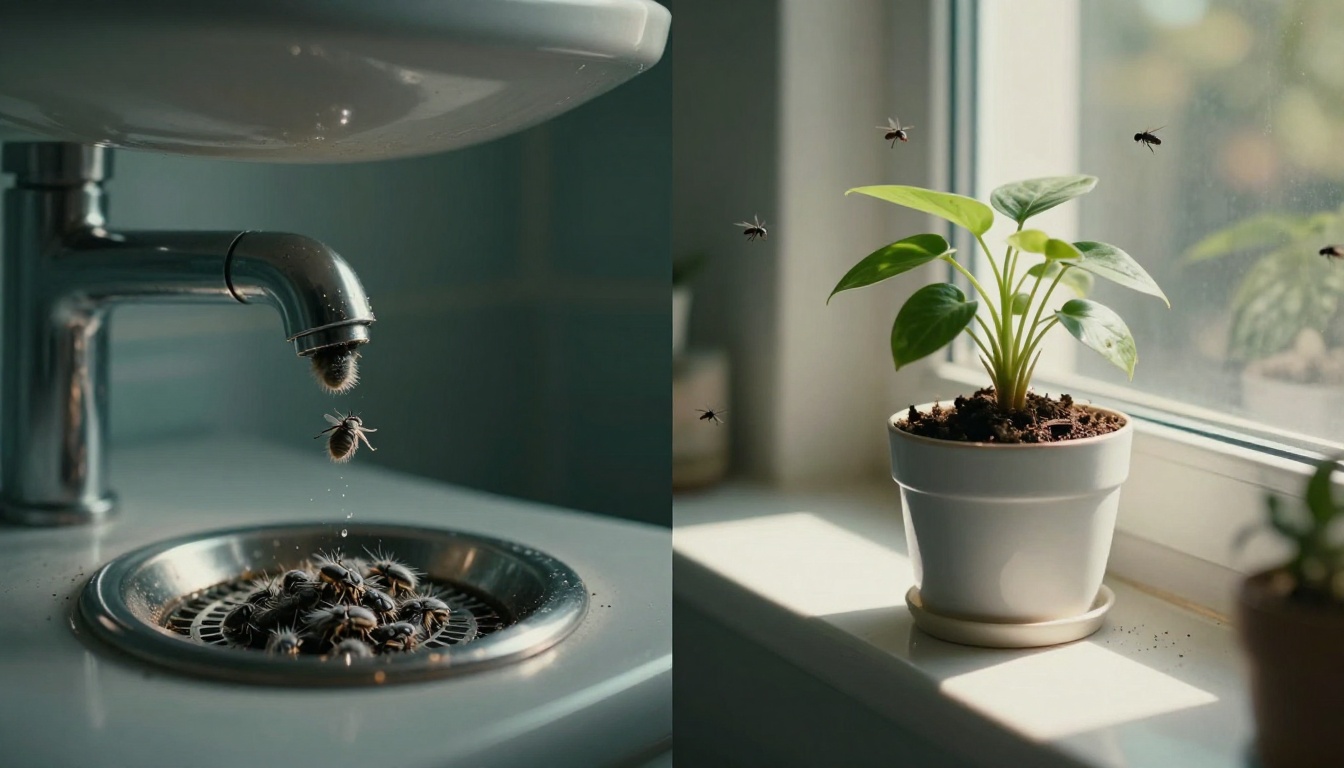
Tiny flies near a sink, shower, or favorite houseplant can make a clean home feel unsettled. Before you book a drain fly exterminator, identify the breeding site before choosing treatment or expecting a permanent solution.
A drain fly infestation usually begins when wet organic matter collects inside drain pipes, creating slimy biofilm that supports the drain fly lifecycle. Fungus gnats develop in damp plant soil instead, while drain flies can persist when moisture alone sustains this biofilm. The adults may look similar, but pest control depends on the source, or an ongoing infestation may remain.
Looking for a Professional Pest Control Service ?
Keep Your Home Pest-Free Year-Round
Professional extermination and prevention services tailored to protect your family and property.
CALL NOWKey Takeaways
- Drain flies are fuzzy, moth-like insects linked to slimy buildup in drains and pipes.
- Fungus gnats are slender dark flies that gather around wet potting mix and houseplants.
- Drain fly larvae and eggs can remain in plumbing biofilm inside drain pipes. The lifecycle may continue after adult flies are sprayed.
- Tape over a drain and yellow sticky cards near plants can help confirm the source.
- Persistent drain activity may point to a hidden leak, damaged pipe, or moisture problem.
How to Identify Drain Flies and Fungus Gnats
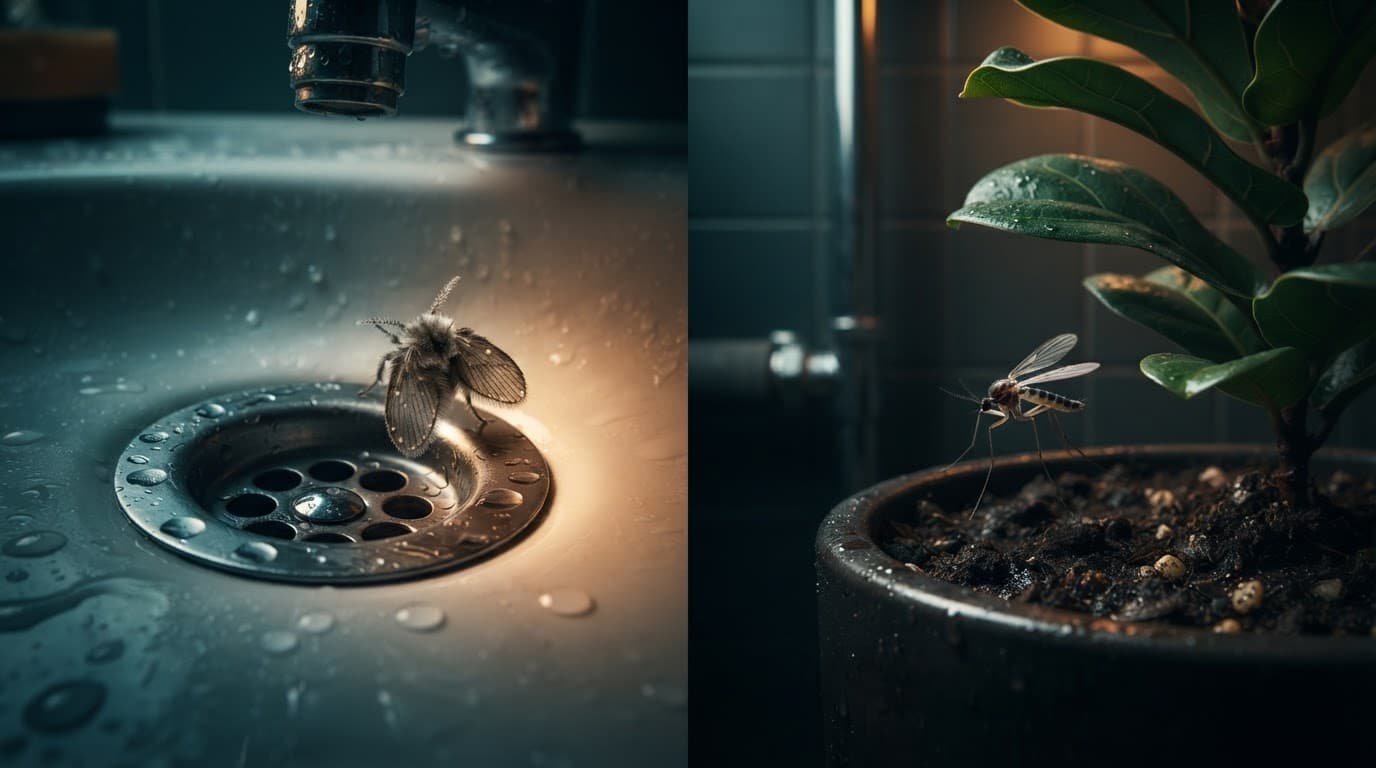
Start with where you see them. Drain flies, also called moth flies or sewer flies, rest near sink drains, tubs, showers, toilets, and floor drains. They look fuzzy, with broad wings held roof-like over their bodies. Their presence usually points to biofilm in drain pipes, not simply a dirty-looking fixture.
Fungus gnats are darker, thinner, and more mosquito-like. They hover around plants or scurry across damp soil after watering. Location is a strong clue, but it isn't conclusive. Fungus gnats can sometimes use moist debris in drains.
Drain Fly Signs Around Sinks, Showers, and Floor Drains
A drain fly infestation often centers on one fixture. You may see gray or black slime that signals biofilm, a stale odor, slow flow, or adult flies returning to the same drain each morning.
That recurring activity often points to a biofilm-based breeding site. Their larvae and eggs remain in the moist layer below the visible drain opening. The Arkansas Extension guide to drain flies stresses that removing the biofilm food layer feeding those larvae interrupts the lifecycle and gives pest control a path to a permanent solution.
Fungus Gnat Signs Around Houseplants and Damp Potting Soil
Fungus gnats gather at the rim of a pot, hover above soil, and become more active after watering. Yellow sticky cards near the soil often catch the adults.
Check for potting mix that stays wet, decaying leaves, standing water in saucers, and tiny pale larvae in the top layer. Drying the soil between waterings is the foundation of control.
How to Find the Breeding Site Before You Treat the Flies
Killing the visible flies is like mopping up water while a pipe still leaks. Inspect sink drains, drain pipes, garbage disposals, refrigerator drain pans, floor drains, plant trays, rarely used fixtures, and unexplained moisture. Finding the source first makes pest control more responsible and can lead to a permanent solution.
Use Simple Covers and Sticky Traps to Confirm the Source
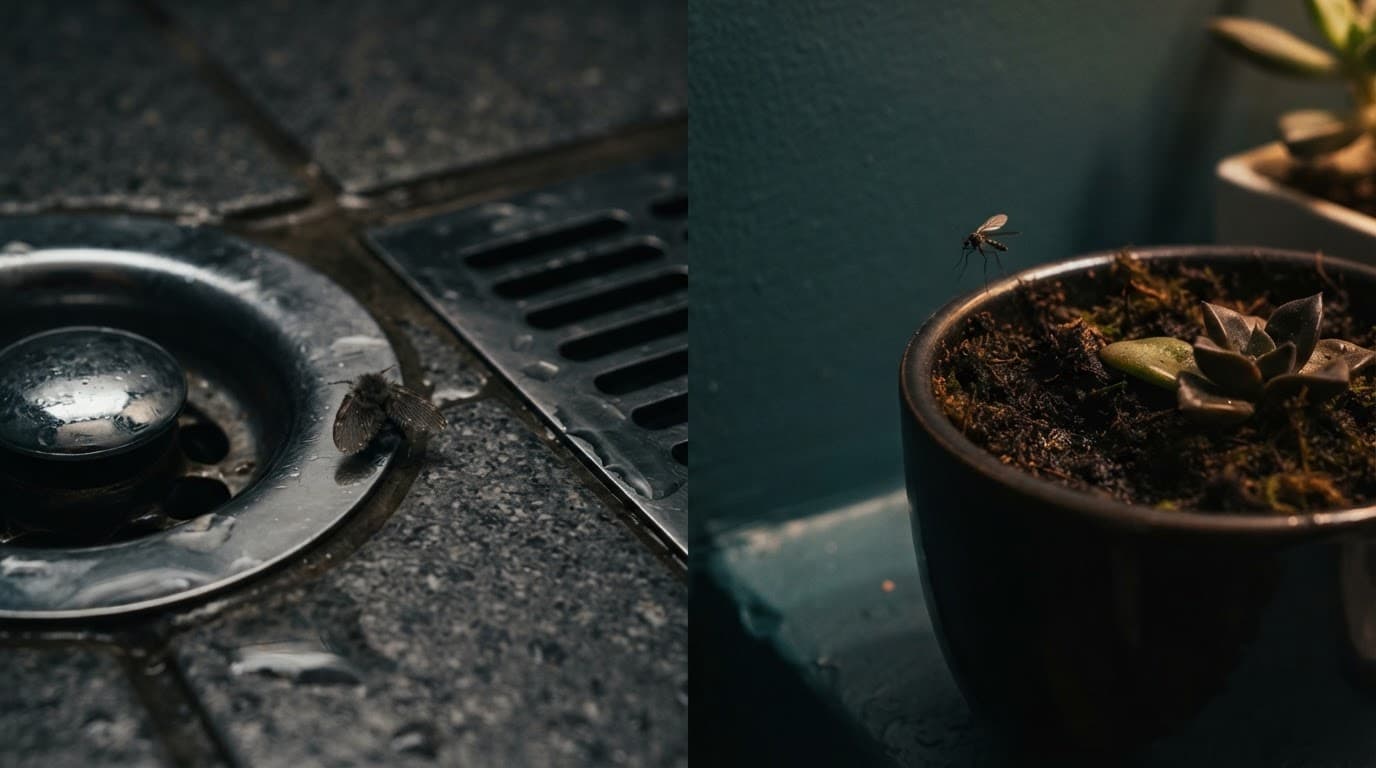
Place clear tape, plastic film, or a clear cup over a suspected drain overnight. Don't cover a drain you need to use. New adults trapped beneath the cover point to activity from that plumbing line, where biofilm may support development.
For plants, place yellow sticky cards close to the potting soil. This helps separate fungus gnats from plumbing-associated adults. Compare which location catches new adults over several days.
Adult flies show where they rest. The breeding site is where the next generation appears.
What to Look for Inside Drains and Plant Pots
Look below the water line for sludge, hair, food residue, and slime. This biofilm can hold organic matter and support larvae. Slow drainage or a sour odor may also reveal buildup in a P-trap, where biofilm can persist.
In pots, check for sodden soil, rotting roots, decaying foliage, and water sitting in a saucer. Larvae and eggs are evidence of an active lifecycle. In commercial kitchens, moisture around floor drains can also sustain biofilm.
An unused drain may have a failed waterless trap seal. Recurring activity can indicate biofilm from an unresolved plumbing source. Hidden moisture, a broken pipe, uncapped lines, and damp voids behind walls need professional inspection. Addressing that source is often more effective than treating visible adults alone.
The Right Fix for Drain Flies and Fungus Gnats
Each pest needs a different response, and removing breeding material matters more than killing visible insects. Drain flies require physical cleaning and moisture repair, while fungus gnats require drier soil and cleaner plant care.
How to Clean a Drain Fly Breeding Site
Scrub accessible drain walls, targeting biofilm, and reach inside the P-trap and accessible pipe surfaces, where more biofilm can persist. This physical cleaning dislodges biofilm after brushing. Clean the garbage disposal, where additional biofilm may collect, then flush according to your plumbing and product directions. Use boiling water only when it's compatible with the plumbing and product instructions.
A labeled biological surfactant or enzyme-based product may help break down organic buildup after physical brushing. These products use bacteria to help digest residue, and follow-up treatment may be needed when remaining biofilm supports renewed growth. Chemical treatments can't replace physical removal, and repeated chemical treatments may add plumbing or health risks. Use boiling water only when compatible with your plumbing and product instructions, and don't treat it as a universal fix. Never mix bleach with other drain chemicals, and don't rely on bleach alone to solve the problem.
How to Reduce Fungus Gnats in Houseplants
Let the upper soil dry between waterings, empty saucers, and remove dying leaves. Repot plants with failing roots or exhausted, soggy mix. This disrupts the lifecycle by making conditions less suitable for larvae before eggs hatch.
Sticky traps reduce adult flies and show whether numbers are falling, but they don't provide a permanent solution alone. A labeled Bti soil treatment targets larvae in soil, unlike drain treatment, while insecticidal soap may reduce adults it contacts. Follow the label and test products carefully on sensitive plants. Fungus gnat control differs from drain flies because it focuses on larvae in soil.
When a drain fly exterminator Is the Best Next Step
Call a professional when routine efforts don't stop the activity, the source is unclear, or insects appear in several rooms. A suspected infestation may involve biofilm buildup beyond an accessible fixture. A professional may also inspect drain pipes, the P-trap, and a waterless trap seal. Hidden moisture can come from a broken pipe, septic systems, walls, floors, crawl spaces, slabs, or around a toilet.
A qualified pest control specialist may use moisture checks, a borescope, smoke testing, and plumbing coordination to locate the source. Recurring adults can indicate concealed biofilm, so a biological surfactant may be recommended. Chemical treatments should follow the label or be applied by a qualified professional, while resolving moisture and breeding conditions offers the best path toward a permanent solution.
For help with a suspected infestation and a quote, visit US Pest Control Services.
Looking for a Professional Pest Control Service ?
Keep Your Home Pest-Free Year-Round
Professional extermination and prevention services tailored to protect your family and property.
CALL NOWFrequently Asked Questions
Do drain flies bite people?
No. Drain flies are nuisance pests and don't bite people. Their presence can still point to dirty drains or unwanted moisture.
Can fungus gnats damage houseplants?
Heavy larval activity can bother tender roots, especially on seedlings. Healthy mature plants usually recover once soil moisture improves.
How long does it take for them to disappear?
Adults can linger after cleaning, but numbers should fall as larvae lose their breeding material. Activity may continue until that material and its biofilm are removed.
Are drain flies the same as fruit flies?
No. Fruit flies gather around fermenting food, produce, and spills. These pests favor wet organic film in plumbing.
Can an unused drain attract them?
Yes. Seldom-used drains can collect stagnant water and biofilm, which may support activity. Run water regularly and clean the drain opening and trap area.
Final Thoughts
Flies near damp plumbing and biofilm usually indicate a plumbing-related issue. Flies around wet houseplant soil point toward fungus gnats.
Confirm the source before choosing a treatment, since both pests can appear in other moist areas. If they persist, a drain fly exterminator can help address moisture conditions for a more permanent solution. Plumbing biofilm points to drain flies, while damp potting soil points to fungus gnats.