
A termite inspection turns a nagging doubt into a practical record of visible conditions. Homeowners often schedule one before a sale, after finding mud tubes or discarded wings, or when a leak has left part of the house damp.
Knowing what happens during a termite inspection takes some mystery out of the visit. A termite inspector assesses accessible indoor and outdoor areas, documenting visible evidence without opening walls. The inspection can't guarantee every concealed area is pest-free, but it can explain what the findings may mean.
Key Takeaways
- A standard termite inspection is mostly visual and focuses on accessible wood, moisture, and termite entry routes.
- Inspectors check foundation edges, lower-level areas, rooms, attics, garages, and utility areas.
- Mud tubes, frass, soft wood, and blistered paint deserve a closer look for termite damage.
- Clear clutter and document leaks or past activity, but leave suspected mud tubes in place.
- The inspection report identifies visible evidence, risk conditions, inaccessible areas, and recommended next steps.
What Happens During a Termite Inspection: A Room Guide for Homeowners
A termite inspection usually begins with a short conversation. Share past treatments, swarm sightings, plumbing leaks, drainage repairs, and areas where you noticed damage. That history gives the termite inspector a useful starting point.
During the termite inspection, the inspector walks around the house and through accessible rooms. A flashlight, moisture meters, and a probing tool may help examine exposed wood and damp conditions. The inspection also considers live insects, old damage, mud shelter tubes, fungal decay, wood-to-soil contact, and other wood-destroying insects.
Looking for a Professional Pest Control Service ?
Keep Your Home Pest-Free Year-Round
Professional extermination and prevention services tailored to protect your family and property.
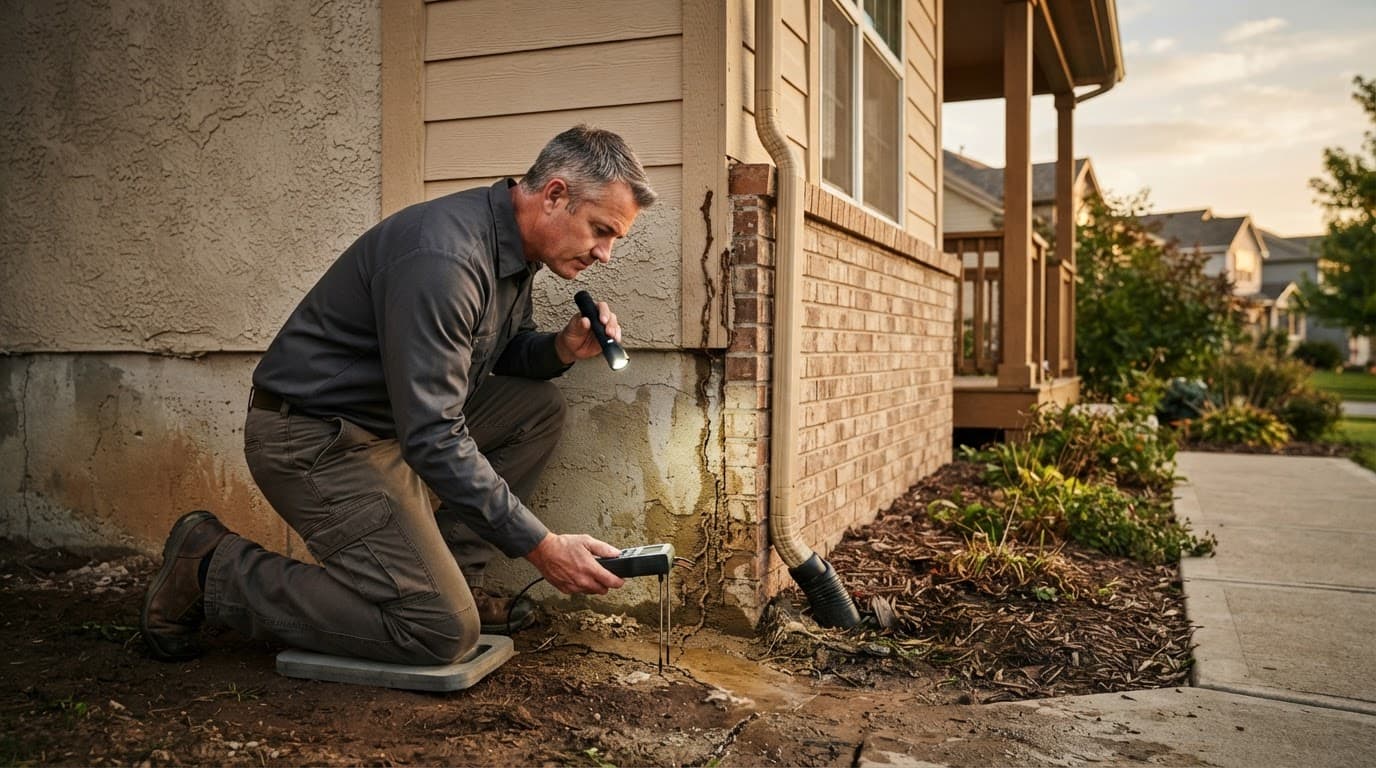
CALL NOWOutside, the inspector traces the home's perimeter and entry points
The exterior check follows the foundation, siding, porch posts, deck supports, steps, cracks, and utility penetrations. Termites often travel in pencil-width mud tubes that protect them between soil and wood.
Damp soil against siding, firewood stacked near the wall, old stumps, cardboard, and lumber can all create inviting routes. Branches touching the structure may also hold moisture against the house. The common signs of termite activity include mud tubes, discarded wings, and damaged wood, but an inspection looks beyond obvious clues.
Basements, crawl spaces, and foundations get a close look
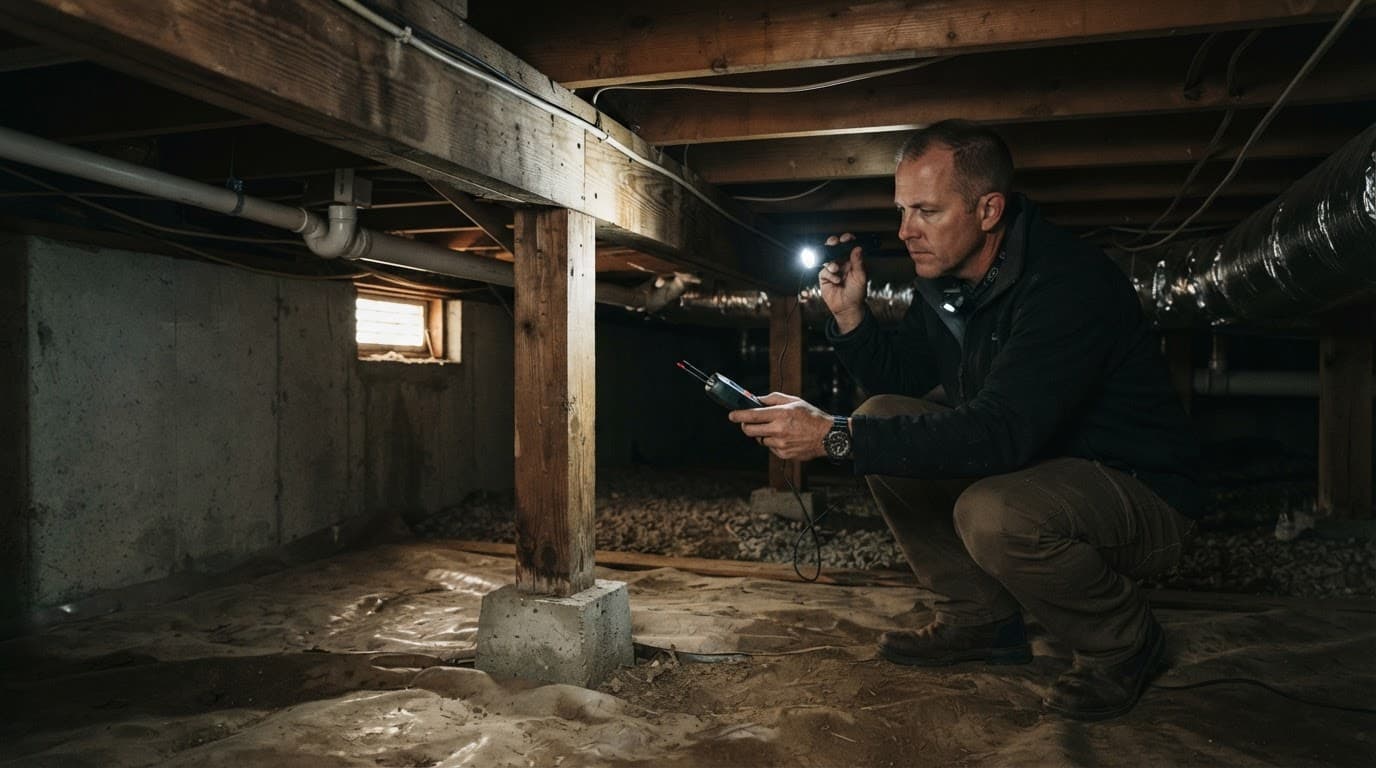
In unfinished lower areas, the inspector examines sill plates, floor joists, support posts, subflooring, vents, and exposed foundation edges. Plumbing lines receive attention because a slow leak can keep nearby framing wet.
Probing may reveal soft spots, hollow-sounding wood, blistering, or staining. Standing water, heavy insulation, and stored belongings can block the view. These conditions don't prove termites are present, but they deserve mention in the report.
Living rooms, bedrooms, kitchens, and bathrooms are checked for clues
Inside finished rooms, the inspection is careful but non-destructive. Inspectors check baseboards, door and window frames, exposed trim, floors, cabinets, ceilings, and walls near plumbing or exterior surfaces.
Discarded wings near windows can point to a recent swarm. Bubbling paint, cracked trim, frass, and wood that sounds hollow when tapped may indicate affected wood or termite damage. However, no single clue is conclusive, and a standard appointment doesn't involve removing drywall, flooring, paneling, or cabinets.
Attic and crawl space areas reveal hidden risks
Attics can show roof leaks, damp framing, poor airflow, and insect damage around exposed rafters. In some situations, damage or pellets may raise questions about drywood termites, though attic damage can have other causes.
Garages and utility rooms often reveal foundation gaps, water-heater leaks, cardboard storage, and wood meeting masonry. The inspector checks only areas that are safe and reasonably reachable. A low crawl space, sealed attic hatch, crowded storage room, or locked shed may appear as an inaccessible area in the final report.
Why Moisture and Wood Contact Matter
During a termite inspection, moisture and wood contact can reveal conditions that support pest activity. Subterranean termites need moisture, soil contact, and a hidden route into a structure. A wet patch beside the foundation isn't proof of an infestation, yet it can support conditions termites prefer.
Water problems can blur the inspection picture
A dripping pipe, clogged gutter, missing downspout extension, or poor grading can send water where it shouldn't go. Wet wood may decay, and decay can resemble insect damage at first glance.
Moisture corrections improve the home even when no active termites are found, because damp framing can attract several wood-destroying pests.
Soil should stay below exterior wood
Siding, door trim, deck framing, and porch posts should not disappear directly into soil. When earth bridges that gap, the inspector loses a clear view, and termites gain a covered path.
Correcting direct wood contact may involve adjusting soil, moving a planter, or repairing damaged exterior materials. Eliminating these soil-to-wood bridges is useful maintenance, even when no active termites are found. A pest professional can explain which conditions need immediate attention and which belong on a maintenance list.
How to Prepare Your Home for a More Complete Termite Inspection
Preparation helps the inspector see more of the home and reduces time spent shifting belongings. These preventive measures include clearing paths to the attic hatch, crawl spaces, basement walls, garage corners, utility equipment, and suspected trouble spots.
Outside, move firewood, loose lumber, cardboard, planting boxes, and stored materials away from exterior walls when practical. Make porches, deck edges, and foundation lines visible. Keep a note of past treatments, repairs, leaks, and the dates you saw wings or swarming insects.

Fix simple moisture and access problems before the appointment
Repair an active, visible plumbing drip if you can do so safely. Clear clogged gutters, extend downspouts, and remove standing water near the structure. These steps make current conditions easier to assess.
Don't paint over damage or pull down suspected mud tubes before the inspector arrives. Those details can help identify the type and direction of activity. Secure pets, and ask the company whether an adult needs to be home during the appointment.
What the Termite Inspection Report Means and What Happens Next
A useful inspection report records the areas inspected and identifies visible termite activity, prior damage, moisture issues, favorable conditions, and unreachable spaces. It may document signs of an infestation, but it cannot confirm concealed damage or structural integrity. Photos often make the findings easier to locate later.
The inspection process cannot promise that every hidden void is pest-free. Termites can travel behind finished walls, below floors, above ceilings, and inside covered framing. The report shows what was visible and what remained out of view.
State rules can affect reports and treatment contracts. For example, Georgia's wood-destroying organism regulations set requirements for certain termite-control agreements. Ask which report format applies in your state, especially during a real estate transaction.
Looking for a Professional Pest Control Service ?
Keep Your Home Pest-Free Year-Round
Professional extermination and prevention services tailored to protect your family and property.
CALL NOWHow much does a termite inspection cost?
Fees for a termite inspection depend on location, square footage, crawl-space access, inspection purpose, and report requirements. A routine residential inspection may cost around $150 to $300 in some markets, while a detailed real estate report may run about $200 to $350.
Free inspections can also be offered when a company hopes to provide treatment. Read the terms before booking. Request a written quote stating whether the price includes exterior and interior areas, a formal report, photos, and any follow-up visit.
Choosing a qualified termite inspection company
Choose a company that holds the required state license and carries insurance. A licensed specialist should understand local termite species, construction styles, and reporting rules.
Ask whether the termite inspector provides a detailed written report, clear treatment choices, warranty terms, and re-inspection information. The findings may lead to discussions about termite treatment, including bait systems or liquid barriers when appropriate. Request a written treatment plan before approving work, and ask whether the company checks for a wood-destroying organism, such as carpenter ants or wood-decay fungi.
Ask whether warranty coverage includes a termite bond and how future inspections are handled. Avoid pressure to approve expensive work on the spot, and get another opinion when the recommendation is substantial. Choose a provider with a strong pest control reputation and clear communication.
Homeowners can contact uspestcontrolservices.online to request professional inspection help and treatment guidance. Before booking, confirm the service area, credentials, pricing, and exact inspection scope.
Frequently Asked Questions
How long does a termite inspection take?
Many single-family home inspections take one to two hours. Large homes, packed garages, restricted crawl spaces, outbuildings, and detailed reports for a real estate transaction can take longer.
Do homeowners need to leave during a termite inspection?
Most homeowners can stay home during an inspection. However, secure pets and keep children away from crawl-space openings, ladders, equipment, and any area where the inspector is working.
Can termite inspections happen year-round?
Yes. Inspections can take place in every season because inspectors search for evidence, damage, moisture, and conducive conditions. Swarm activity varies by region and weather, but old tubes and wood damage remain visible after a swarm ends.
How often should a house be inspected for termites?
Annual inspections are a sensible routine in places with regular termite pressure, prior activity, or crawl spaces. A pest company may recommend a different schedule based on your home's construction, warranty, and local conditions.
Will a termite inspection find termites behind walls?
A standard visual inspection cannot see through intact walls, floors, or ceilings. If visible clues suggest concealed activity, the inspector may recommend additional evaluation or treatment based on the evidence.
What should you do after seeing a termite swarm?
Save a few insects, keep any discarded wings, or take clear photos if possible, then arrange an inspection. Don't rely on wings alone, since flying ants can look similar at a glance. A swarm warrants evaluation, but it doesn't prove an infestation inside your home.
A Clearer View of Your Home's Condition
The inspection is a careful search for visible activity, damage, moisture, and conditions that make a house easier for termites to enter. It can't clear every concealed space, but a thorough report gives you a grounded place to start.
For professional guidance on What Happens During a Termite Inspection and practical next steps, contact uspestcontrolservices.online. Prepare the property, correct dampness or wood-to-soil contact, and review the findings carefully before small conditions grow into larger repairs.